Showing posts with label Camping. Show all posts

Sunday, February 17, 2013

Updates

Some News & Changes
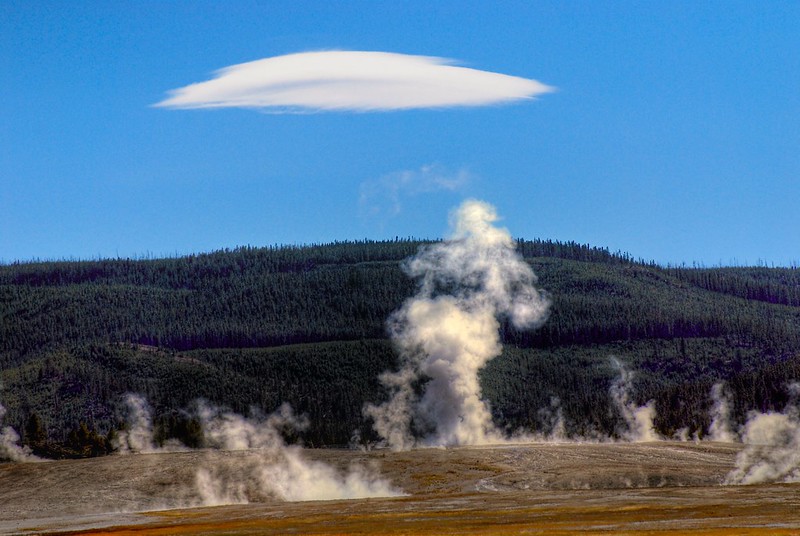
RARE LENTICULAR CLOUD OVER FOUNTAIN RIDGE

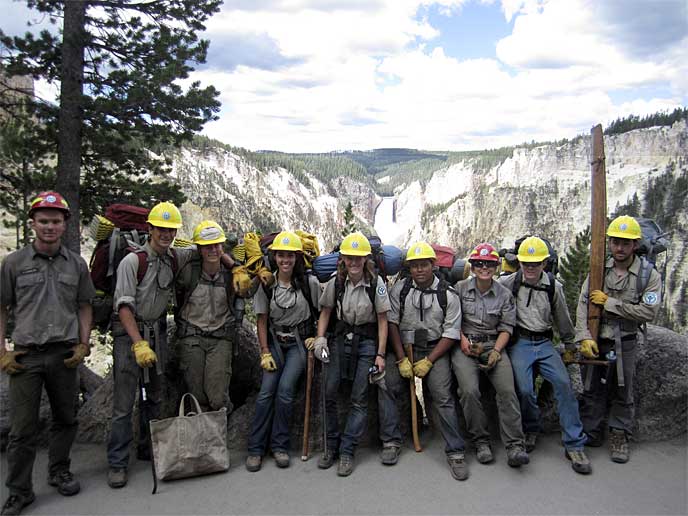
YELLOWSTONE RECRUITING FOR 2013 YCC
-- Two month long sessions are being offered this year. Fifty youth will be recruited from around the nation. Live and learn in Yellowstone. Work and play in Yellowstone. Get paid for the experience.
-- Yellowstone's YCC Program recruits youth from all social, economic, ethnic, and racial backgrounds. Corps members work together under adult leadership to complete conservation projects such as rehabilitation of trails, campground restoration, and a wide variety of resource management and maintenance projects. Participants and staff develop their job and leadership skills while further exploring personal values, gaining self-esteem, expanding their awareness of work ethics, and learning firsthand about environmental and conservation issues. Corps members will also participate in evening and weekend recreational activities and discover the many options for careers in the National Park Service and other land management agencies.
News Release: HERE.
Information: HERE.

PROPOSED CAMPGROUND FEE INCREASE
-- Yellowstone National Park is seeking public comment on a proposal to increase the daily fee charged to stay in campgrounds operated by the National Park Service.
-- For the Mammoth Hot Springs and Norris campgrounds which have flush toilets, the daily fee would be increased from $14 to $20.
-- At Tower Fall, Lewis Lake, Indian Creek, Pebble Creek, and Slough (slew) Creek campgrounds which have vault toilets, the daily camping fee would go from $12 to $15.
-- Individuals who hold a Senior Pass or Access Pass would continue to receive a 50-percent discount on camping fees charged at these National Park Service operated campgrounds.
-- The Bridge Bay, Canyon, Grant, and Madison campgrounds and the Fishing Bridge RV Park in Yellowstone are operated by Xanterra Parks & Resorts. Daily camping fees at these sites range from $20.50 to $45.00. They would not be affected by this proposal.
News Release: HERE.
Comment HERE.

HYDROPOWER BACK IN YELLOWSTONE
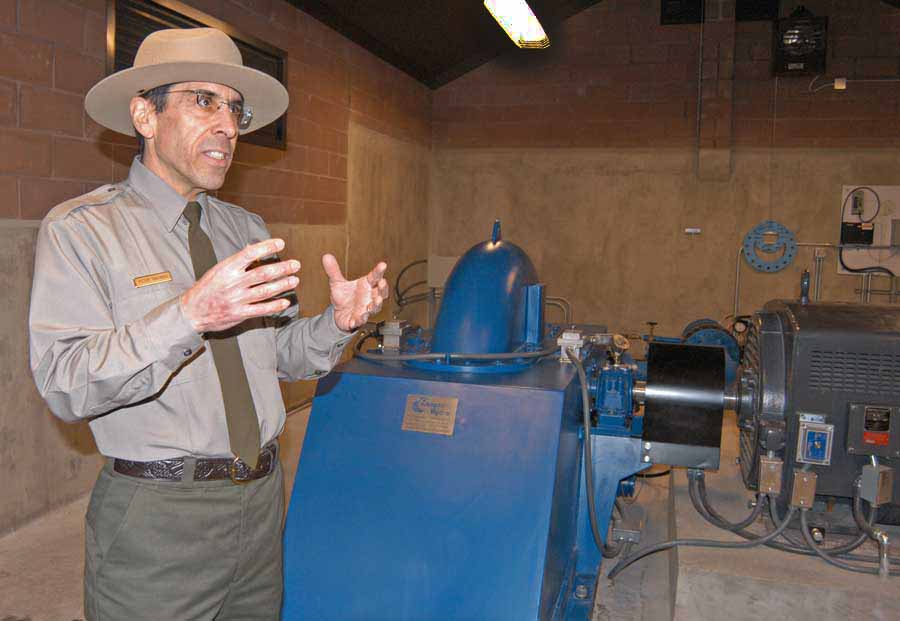
-- More than a century after U.S. Army troops harnessed the power of flowing water to light Fort Yellowstone, the park is generating electricity from water again.
-- The new Mammoth micro hydro plant relies on naturally-occurring water dynamics. It captures energy from the water that flows approximately 560 feet downhill from the combined Gardner River, Panther Creek and Indian Creek water intakes on Swan Lake Flats to the existing storage reservoir at Mammoth's water treatment plant through an existing 12-inch pipe. A newly-installed generator and turbine rely on an average water flow volume of 4 cubic feet per second to produce electricity.
-- The new plant is expected to generate an average of 175 kilowatts of energy depending on the normal fluctuation of the water supply, though it is capable of producing up to 230 kilowatts. Based on an "up-time" of 80 percent (20 percent calculated for maintenance down time), that equates to more than 1.2 million kilowatt hours supplied to the park each year. The new technology also allows for this fully sustainable energy source to be synchronized directly with Northwestern Energy's electric grid, providing a savings to the park's electrical bill of approximately $73,000 annually.
News Release: HERE.
-------

Tuesday, September 26, 2006

Thermophilic Algae

PARKS GET ROYALTIES ?
Voice Your Opinion
park camping down
yellowstone river
recycling
.nps photo.

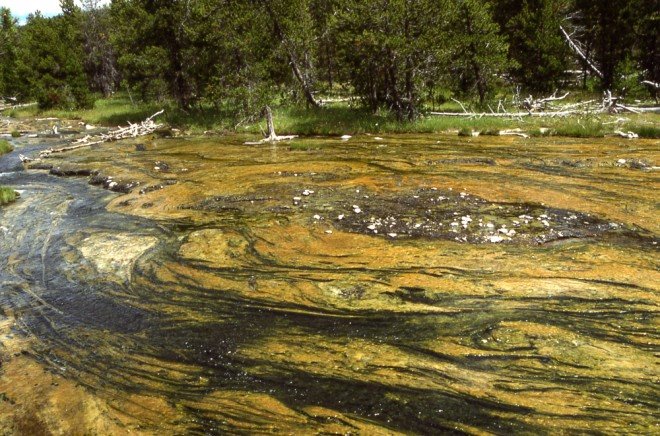
.. After over 15 years of poking around in Yellowstone's thermophiles, the government has decided to explore the ramifications of commercial exploitation of thermophilic bacteria. This has been expanded into a Draft Environmental Impact Statement for all of the National Parks. Not just the algae and bacteria of Yellowstone are addressed, (though they are the driving force,) but all of our park's resources are included in the EIS.
.. The National Park Service news release finally asks for public input. It's available HERE. It's reproduced below. The prefered alternative is:
"The preferred alternative would require researchers to enter into an agreement with the NPS before using their results for commercial purposes. Researchers would have to qualify under the strict standards for a park research permit before any discussion of a benefits-sharing agreement could begin. The agreement would require researchers to provide some benefit back to the park, such as staff training, new research equipment, royalties or money to be used to support resource conservation and management. Researchers would still be prohibited from selling specimens or samples collected in parks. Researchers would not be given any special privileges just because their research may result in a commercial application."
.. Yellowstone National Park is the lead agency in this review process, (as if they had so little to do already,) and the complete EIS information is available through the "Benefits Sharing DEIS Team, Yellowstone Center for Resources, P.O. Box 168, Yellowstone National Park, Wyoming 82190." A Hard copy on CD is available.
NPS NEWS RELEASE
National Park Service News Release

For Immediate Release:
September 25, 2006
Contact(s): Al Nash, 307.344.2010

Gerry Gaumer, 202.208.6843


National Park Service Releases Draft Environmental Impact Statement On Benefits Sharing For Public Review

A Draft Environmental Impact Statement (EIS) addressing whether the National Park Service (NPS) should benefit from commercial applications arising from research in the parks has been released for public review and comment.

The Servicewide Benefits Sharing Draft EIS addresses the occasional circumstance when researchers who analyze small genetic or biochemical samples discover commercially useful scientific information. The alternatives in the draft EIS do not change the way research permits are issued or the way research is conducted in the national parks. The alternatives only change the obligations some researchers
would have to parks as a result of their use of the research.

The alternatives address whether the NPS should benefit in some way if the outcome of research conducted in the parks can be used for commercial purposes, known as benefits-sharing.

The preferred alternative would require researchers to enter into an agreement with the NPS before using their results for commercial purposes. Researchers would have to qualify under the strict standards for a park research permit before any discussion of a benefits-sharing agreement could begin. The agreement would require researchers to provide some benefit back to the park, such as staff training, new research equipment, royalties or money to be used to support resource conservation and management. Researchers would still be prohibited from selling specimens or samples collected in parks. Researchers would not be given any special privileges just because their research may result in a commercial application.


The Draft EIS and an electronic form to submit comments on the internet can be found at the National Park Service’s Planning, Environment and Public Comment (PEPC) website at http://parkplanning.nps.gov. You need to select “Washington Office” and then click on “Benefits Sharing”. The Draft EIS is also available on CD or in hard copy by writing the Benefits Sharing DEIS Team, Yellowstone Center for Resources, P.O. Box 168, Yellowstone National Park, Wyoming 82190.


Written comments may be submitted through the PEPC website, in person, or by mail. Comments will not be accepted over the phone, by fax, or e-mail. All public comments must be received or postmarked by midnight, December 15, 2006.


..
..nps photo..
_________________________
.."Let's face it: It's hard to protect the parks if no one is interested in them," said Park Service statistician Butch Street. This quote from a news story about why park attendance and camping is down. Read it HERE.
__________________
.. The Helena Independent Record reminds us of the Yellowstone River and its central role in Yellowstone. Read about it HERE.
__________
.. Recycling is a key topic in Yellowstone these days. "Five years ago, nearly 90 percent of the trash from Yellowstone's 3 million visitors each year found its way to the landfill. Now, about 65 percent of the trash is recycled." ''Twenty years ago, we were throwing everything in a garbage can and taking it to a landfill,'' said Steve Iobst, the park's chief of maintenance. ''That's not practicing what we preach.'' Read it HERE.